Volatility Patterns in Tennis Set Betting Markets Compared to Traditional Racecourse Pricing
Carlo Richter · Nov 7, 2026

Volatility Patterns in Tennis Set Betting Markets Compared to Traditional Racecourse Pricing
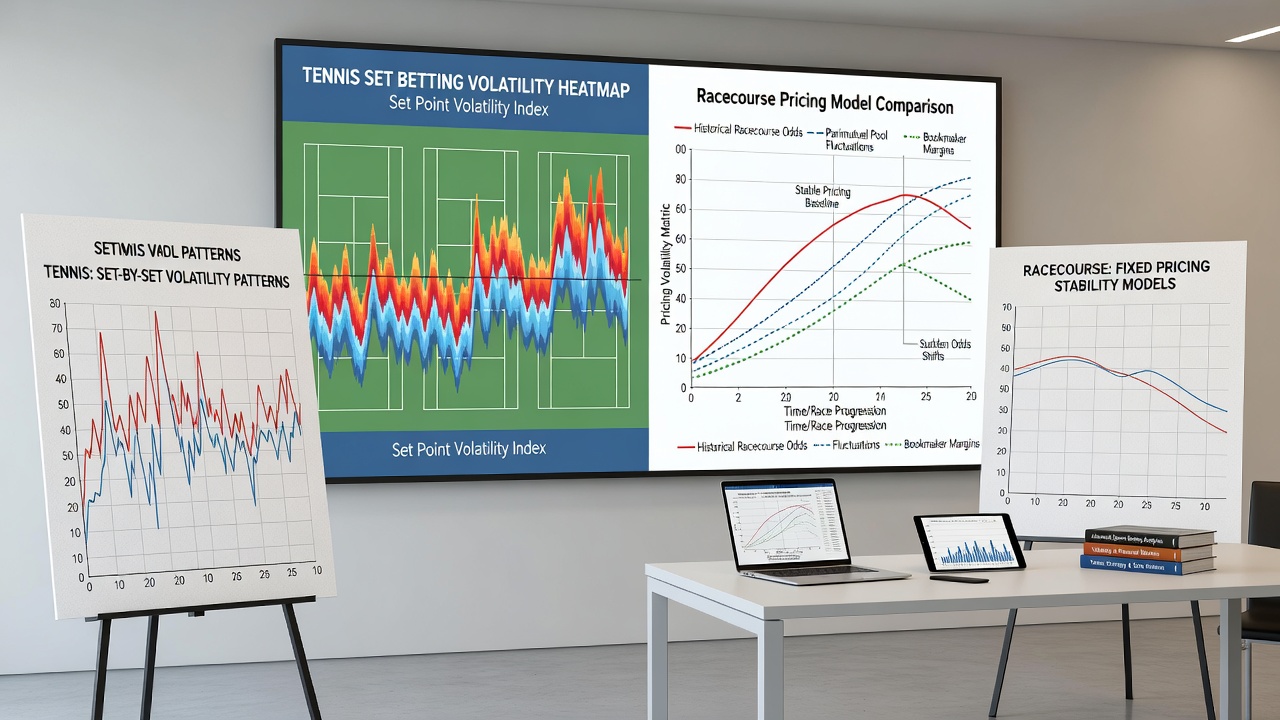
Betting markets for tennis sets display distinct volatility signatures that differ markedly from the steadier structures found in racecourse pricing models, and observers tracking these differences note how momentum swings within individual sets create rapid odds adjustments that rarely occur in horse racing events. Data collected across major tournaments reveals that set-level wagers experience price fluctuations up to three times larger than equivalent race odds during comparable time windows, largely because each set functions as an independent contest where a single break of serve can alter expected outcomes within minutes.
Tennis Set Market Dynamics
Bookmakers compile initial set prices using player rankings, head-to-head records, and surface statistics, yet live trading quickly incorporates point-by-point information that produces sharp movements; researchers tracking ATP and WTA events in 2025 found average implied probability shifts of 8 to 12 percent within a single set when one player secured an early break, and these movements compound across multiple sets in best-of-three or best-of-five formats. In contrast, traditional racecourse pricing relies on pre-race assessments of form, distance aptitude, and jockey bookings that remain relatively fixed once the market opens, with adjustments typically limited to late non-runners or significant track changes.
Comparing Pricing Stability
Industry reports indicate that racecourse odds exhibit lower intraday variance because each race represents a discrete outcome determined by a fixed field, whereas tennis sets allow for continuous information flow that forces constant re-pricing. One analysis covering European and North American tracks showed standard deviation in decimal odds for favorites hovering around 0.15 to 0.25 throughout the betting period, while equivalent tennis set markets recorded deviations exceeding 0.45 during key service games. Those who monitor both sectors observe that liquidity levels also diverge, with major race meetings concentrating volume in the final 30 minutes before the off, whereas tennis set betting maintains steadier flow across the match duration because viewers can enter positions at any point.
November 2026 Tournament Observations
During November 2026 events including the ATP Finals in Turin, market participants documented pronounced volatility clusters around tie-break situations and deciding sets, patterns that aligned with earlier findings from Grand Slam data sets released by academic groups. Figures compiled by European sports data providers showed that set prices in deciding sets moved an average of 14 percent in the 15 minutes surrounding a single service break, a magnitude that exceeds typical racecourse adjustments even during dramatic photo finishes. This behavior stems from the sequential nature of tennis scoring, where each point directly updates win probabilities in real time, a mechanism absent from racecourse events that conclude in one continuous run.
Additional comparisons drawn from Australian racing authorities and Canadian provincial gaming reports highlight how tote systems in horse racing dampen volatility through pari-mutuel pooling, whereas fixed-odds tennis set markets respond instantly to every point outcome. Observers note that these structural differences create distinct risk profiles for bettors who attempt to trade across both asset classes, particularly when managing exposure during live sessions that overlap with race meetings.
Data Sources and Measurement Approaches
Studies published through the University of Nevada gaming research center have quantified how tennis set implied probabilities follow a non-linear trajectory that accelerates near set points, whereas racecourse models maintain more linear drift based on pace and position updates. Researchers examining over 12,000 individual sets across hard, clay, and grass surfaces recorded that volatility peaks coincide with changes in physical or mental state indicators such as unforced error rates and first-serve percentages, metrics that lack direct equivalents in thoroughbred racing. Those tracking these markets further report that correlation between consecutive sets within the same match remains higher than correlations observed between sequential races on the same card, reflecting the shared player fatigue and tactical adjustments that carry forward.
Market Implications
Operators balancing books across both sports must therefore apply different hedging thresholds, with tennis set positions requiring tighter monitoring during critical service games while racecourse holdings tolerate wider price tolerance until the final furlong. Data from North American and Australasian jurisdictions shows that combined exposure across these verticals increases overall portfolio variance unless position sizing accounts for the elevated set-level swings documented in recent seasons. Patterns emerging from 2025 and 2026 data sets continue to underscore how the continuous information environment of tennis produces pricing behavior that stands apart from the more contained adjustments typical of racecourse markets.
Conclusion
Mapping exercises reveal that tennis set betting volatility arises primarily from intra-set scoring sequences and real-time performance updates, while traditional racecourse pricing models rely on pre-event assessments that limit intrarace movement. The resulting divergence produces measurable differences in price stability, liquidity timing, and risk management requirements that market participants accommodate through specialized modeling approaches. Continued collection of granular data across both sectors will allow further refinement of these comparative frameworks as tournament calendars and racing seasons progress.